| Brand Name: | Quectel |
| Model Number: | KCMA32S |
| MOQ: | 1 |
| Price: | Negotiation |
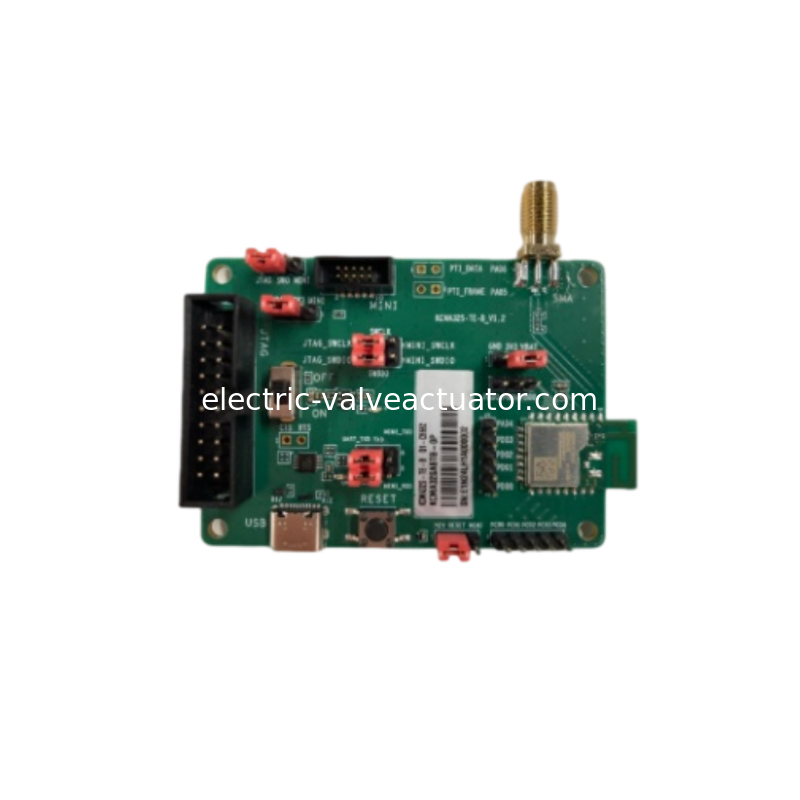
The Quectel KCMA32S TE-B EVB Kit is a dedicated evaluation platform designed to help developers test and integrate the KCMA32S Zigbee and BLE module with confidence. As a compact dual-mode wireless module, KCMA32S brings together Zigbee and Bluetooth Low Energy connectivity in a single solution, making it suitable for smart homes, smart buildings, lighting control, environmental sensing, access control, and other short-range IoT applications.
Quectel supplies the KCMA32S TE-B EVB kit to help you develop applications with the KCMA32S module. This document explains the KCMA32S TE-B interface specifications, RF characteristics, and electrical and mechanical details so you can learn how to effectively use it.
This EVB kit provides a convenient way to explore module behavior without building custom hardware at the early stage of development. Engineers can use it to evaluate wireless pairing, network formation, device discovery, sensor interfacing, firmware updates, and multi-device communication. By offering ready access to the module's interfaces, the kit helps shorten the learning curve and accelerates proof-of-concept work.
One of the key advantages of the KCMA32S module is its support for mesh networking. Mesh capability allows devices to relay messages through neighboring nodes, improving coverage, reliability, and scalability in environments where many endpoints need to communicate with each other. This makes the platform especially suitable for smart lighting systems, building automation networks, and distributed sensor deployments.
The module also integrates enhanced security features, helping protect device identity, communication integrity, and application data. For product teams that plan to deploy large numbers of connected endpoints, this added layer of security can simplify compliance planning and strengthen long-term device trustworthiness.
The KCMA32S TE-B EVB Kit is an ideal starting point for developers who want to evaluate Zigbee and BLE coexistence, test mesh network behavior, and validate peripheral integration before moving to mass production. It bridges the gap between module selection and final product design, enabling faster iteration, clearer validation, and more efficient development of reliable short-range wireless IoT solutions.