| Brand Name: | Quectel |
| Model Number: | Ex800x-XX |
| MOQ: | 1 |
| Price: | Negotiation |
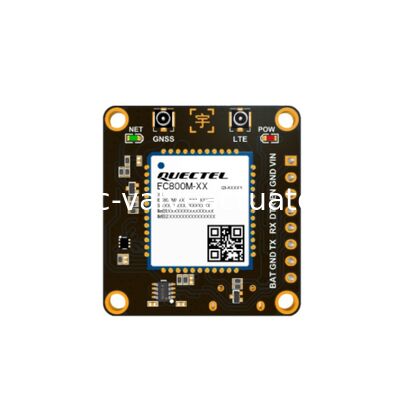
The Quectel QuecPython Ex800x-XX Series Core EVB Kit is a compact evaluation platform designed to make IoT prototyping faster, simpler, and more accessible. Built around the QuecPython development environment, it allows developers to create connected applications using Python-style scripting instead of relying solely on traditional embedded programming workflows. This approach lowers the entry barrier for engineers, students, makers, and product teams who want to validate ideas quickly without spending excessive time on low-level firmware development.
The kit serves as a practical bridge between concept and deployment. Developers can use it to explore cellular connectivity, peripheral control, sensor interaction, cloud communication, and remote device management in a hands-on environment. Because QuecPython runs application logic directly on the module, it reduces the need for an additional microcontroller in many lightweight IoT scenarios, helping simplify hardware architecture and shorten development cycles.
Its modular core-board design makes it suitable for early-stage experimentation, functional verification, and proof-of-concept demonstrations. Teams can test network registration, data reporting, command response, power management behavior, and interface integration before moving to custom hardware. The platform is especially helpful for projects that require rapid iteration, such as smart trackers, remote monitoring devices, industrial data collectors, energy meters, shared devices, and educational IoT kits.
QuecPython also provides built-in support for common IoT protocols and cloud platforms, allowing developers to connect devices to the cloud with minimal effort. Combined with an approachable software ecosystem, this enables faster debugging, easier updates, and more flexible application design.
The Quectel QuecPython Ex800x-XX Series Core EVB Kit is an ideal choice for teams that want to accelerate IoT development through low-code scripting, modular hardware, and ready-to-test connectivity. It helps transform early ideas into working prototypes with greater efficiency and confidence.