| Brand Name: | Chuanyi |
| Model Number: | TC Module |
| MOQ: | 1 |
| Price: | Negotiation |
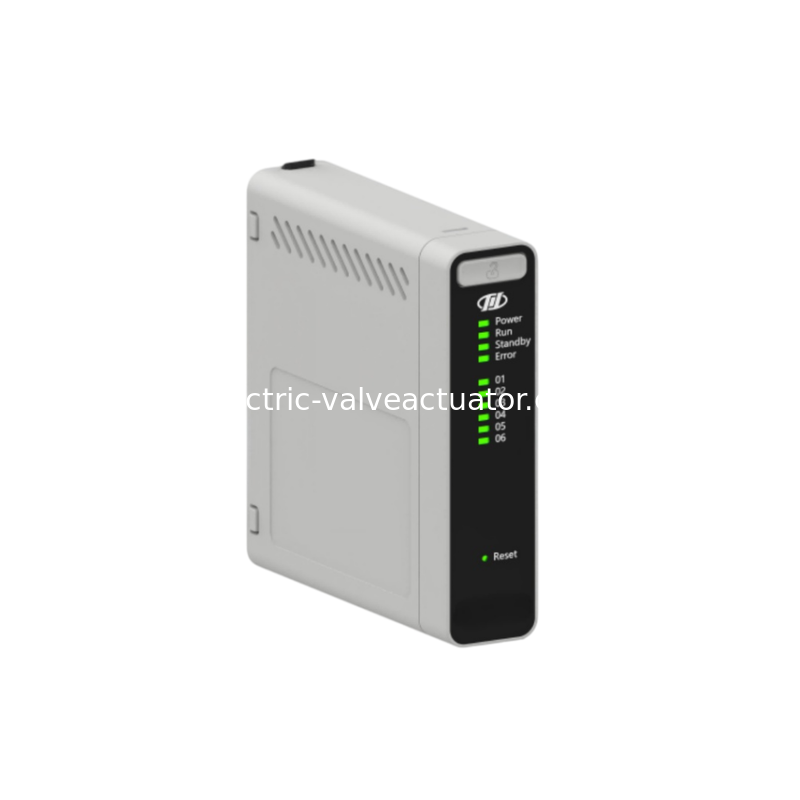
The Chuanyi TC Module is a compact thermocouple temperature acquisition module designed to bring reliable temperature monitoring into industrial automation systems. By connecting thermocouple sensors and converting their signals into digital data, it allows control systems to monitor equipment temperature, environmental conditions, and process status with clarity and consistency. Built around the RS485 interface and Modbus RTU protocol, the module fits naturally into existing automation networks and helps engineers expand temperature measurement points without adding unnecessary complexity.
In industrial environments, temperature is often one of the most important indicators of equipment health and process stability. The Chuanyi TC Module helps turn thermocouple signals into usable data for PLCs, HMIs, industrial computers, gateways, SCADA systems, and other controllers. Instead of relying on scattered instruments or manual inspection, users can collect temperature information through a unified communication bus. This makes it easier to monitor multiple points, detect abnormal conditions early, and maintain consistent control over production and facility operations.
The RS485 communication interface provides stable long-distance transmission and supports multi-device networking. Combined with the widely adopted Modbus RTU protocol, the module can be integrated into systems that already use standard industrial controllers. This compatibility reduces development effort and shortens commissioning time, because engineers can read temperature data through familiar register structures rather than building custom communication solutions. It also allows the module to coexist with other RS485 devices on the same network, making system expansion more flexible.
Thermocouple sensors are widely used in applications that involve heating equipment, ovens, pipelines, reactors, motors, transformers, environmental chambers, and energy management systems. The Chuanyi TC Module acts as a bridge between these sensors and the control layer, helping ensure that temperature data reaches the right system at the right time. With proper integration, it can support:
The module is designed for practical industrial use. Its structure supports stable operation in environments where electrical noise, temperature variations, and continuous runtime are common. By using RS485 communication, it helps reduce the impact of interference that can affect long cable runs or crowded control cabinets. This makes it suitable for workshops, utility rooms, production lines, and distributed monitoring installations where reliability matters more than occasional convenience.
Installation and maintenance are also kept straightforward. The module can be connected to the RS485 bus, addressed, and read through standard Modbus RTU commands. This simplifies wiring compared with running multiple analog signals back to a central controller. For system integrators, the modular approach means temperature points can be added where they are needed most, while keeping the communication architecture clean and scalable. For maintenance teams, a modular design also makes it easier to identify issues and restore normal operation with minimal disruption.
| Communication Interface | RS485 |
|---|---|
| Protocol | Modbus RTU |
| Input Type | Thermocouple (TC) |
| Load Impedance | 700–3200Ω |
| Form Factor | Compact module |
The Chuanyi TC Module is suitable for manufacturing, building automation, energy management, environmental monitoring, laboratory testing, and equipment protection. Whether the goal is to monitor furnace temperature, track ambient conditions, supervise motor heat levels, or support remote data collection, the module provides a dependable way to bring thermocouple measurements into a digital control system.
By combining thermocouple input capability with RS485 Modbus RTU communication, the Chuanyi TC Module delivers a practical solution for industrial temperature acquisition. It helps users move from isolated temperature readings to connected, centralized, and actionable monitoring — supporting safer operation, better visibility, and more efficient automation.