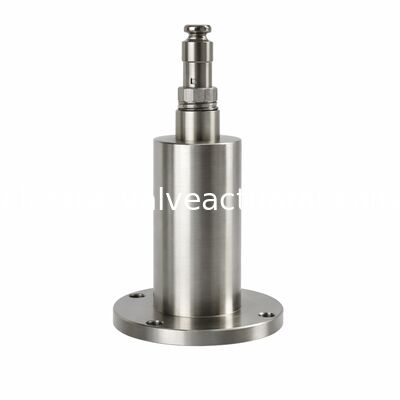
SG-3 Precision Motion Detection Transducer for Slow-Speed Equipment Diagnostics and Wide-Range Displacement Analysis
The SG-3 Precision Motion Detection Transducer is designed to support machinery condition monitoring, displacement measurement, and mechanical diagnostics in industrial environments. For equipment operating at relatively low speeds, identifying subtle movement changes can be essential for understanding mechanical performance and maintaining operational reliability. The SG-3 provides a dedicated sensing solution for applications that require dependable motion detection and comprehensive displacement observation.
Industrial machinery operates under a variety of mechanical loads and environmental conditions. Over time, component wear, structural movement, alignment changes, and other mechanical factors may influence equipment behavior. Reliable sensing information helps maintenance personnel investigate these changes, evaluate machinery conditions, and determine whether further inspection is necessary.
With its focus on slow-speed equipment diagnostics and wide-range displacement analysis, the SG-3 supports industrial users seeking to improve equipment awareness and establish more effective maintenance practices.
Precision Diagnostics for Slow-Speed Machinery
Monitoring slow-speed equipment can present specific challenges because certain mechanical abnormalities may develop gradually or produce movement patterns that are difficult to identify through conventional inspection alone. Reliable motion detection helps engineers observe these changes and gain a better understanding of machine behavior.
The SG-3 is intended to provide motion-related sensing information for compatible industrial monitoring systems. This information can help operators evaluate equipment movement, identify unusual displacement patterns, and investigate potential mechanical concerns.
In suitable applications, the transducer can contribute to the assessment of machinery such as low-speed rotating assemblies, industrial drives, mechanical positioning systems, and other equipment where movement monitoring supports reliable operation.
When combined with vibration analysis, visual inspections, maintenance records, and other diagnostic resources, displacement information provides additional insight into equipment condition. This integrated approach helps technical personnel develop more informed maintenance decisions and improve troubleshooting efficiency.
Wide-Range Displacement Analysis
Displacement monitoring provides valuable information about the position and movement of mechanical components. Changes in displacement may be associated with structural deformation, mechanical looseness, alignment problems, component wear, or variations in operating conditions.
The SG-3 is designed for applications where displacement observation is an important part of equipment condition assessment. Its sensing role supports the collection of motion information that can be evaluated by compatible measurement and monitoring equipment.
Wide-range displacement analysis can help engineers observe changes in mechanical movement across different operating situations. When interpreted alongside other condition indicators, this information may assist in identifying developing issues and understanding how equipment responds to changing loads or operating states.
Actual measurement capabilities depend on the verified product characteristics, installation arrangement, and compatibility of the connected monitoring system. Selecting the appropriate sensing configuration is essential for obtaining meaningful results.
Supporting Predictive Maintenance and Equipment Reliability
Predictive maintenance relies on identifying changes in machinery condition before they develop into significant operational problems. Consistent motion monitoring can help maintenance teams recognize unusual behavior, investigate potential causes, and prioritize inspections according to equipment needs.
The SG-3 can serve as part of a broader machinery condition monitoring strategy. By supplying displacement-related information, it helps support equipment diagnostics and maintenance planning. This can be particularly valuable in industrial facilities where machinery availability directly influences production efficiency.
Integrating sensor information with established maintenance procedures can also improve troubleshooting consistency and help organizations maintain more complete equipment condition records. Although sensing equipment cannot independently prevent every failure, it provides useful information for making better-informed maintenance decisions.
Industrial Applications and System Integration
The SG-3 can be considered for suitable applications in manufacturing, industrial processing, mechanical engineering, and other environments involving slow-speed equipment or displacement-sensitive machinery.
Successful implementation requires attention to mounting conditions, mechanical compatibility, signal connections, and the operating environment. Correct installation and routine inspection help maintain reliable sensing performance and ensure that collected information remains useful for the intended application.
Conclusion
The SG-3 Precision Motion Detection Transducer offers a practical solution for slow-speed equipment diagnostics and displacement monitoring. By supporting the observation of mechanical movement and changes in equipment position, it contributes to condition assessment, predictive maintenance, and operational reliability. For industrial facilities seeking better visibility into machinery behavior, the SG-3 can be a valuable component of an integrated monitoring and diagnostic strategy.