| Brand Name: | GE |
| Model Number: | IC693CMM321-KL |
| MOQ: | 1 |
| Price: | Negotiation |
In industrial automation, communication is the foundation of control. Sensors, actuators, HMIs, SCADA systems, and enterprise platforms all depend on reliable data exchange to keep production moving. For facilities still operating GE Series 90-30 PLC systems, the challenge is not always replacing the controller. Often, it is ensuring that an established control platform can continue to communicate effectively within a modern network environment.
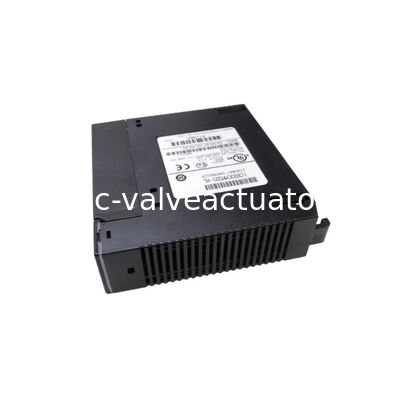
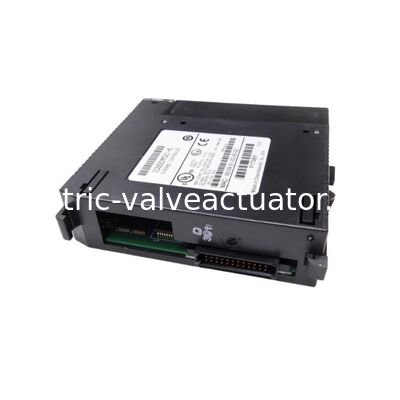
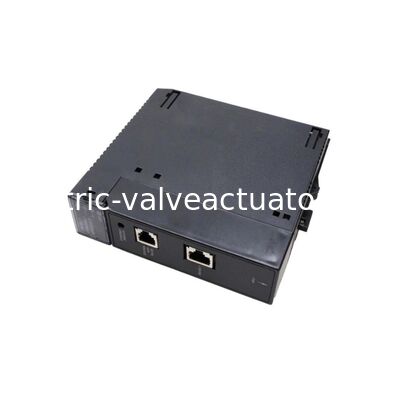
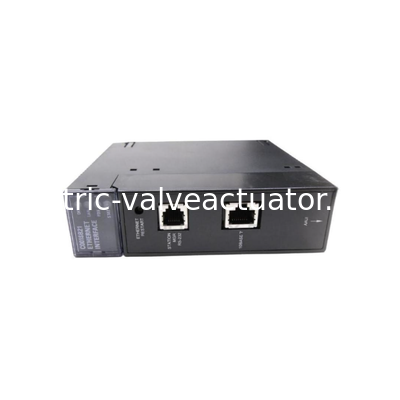
The GE IC693CMM321-KL Ethernet Interface Module addresses this need by providing Ethernet connectivity for 1Series 90-30 programmable logic controllers. It helps bridge the gap between proven legacy control hardware and contemporary industrial communication requirements, allowing existing systems to remain productive, visible, and integrated.
Many industrial facilities rely on Series 90-30 PLCs for critical processes that have operated reliably for years. Replacing an entire control system can be costly, disruptive, and unnecessary when the existing logic and I/O continue to perform well. The IC693CMM321-KL offers a practical alternative by adding Ethernet communication capability to the rack, enabling the PLC to participate in networked operations without a full migration.
This approach supports incremental modernization. Plants can improve connectivity, data access, and remote monitoring while preserving validated control programs, trained personnel knowledge, and existing hardware investments. For maintenance and engineering teams, it reduces the risk associated with large-scale control replacements.
Ethernet has become the standard communication backbone across industrial facilities. The IC693CMM321-KL allows a Series 90-30 controller to connect to Ethernet networks, making it easier to exchange data with HMIs, supervisory systems, data historians, and other networked devices.
This connectivity supports better visibility into machine status, production counts, alarms, and process conditions. Instead of relying solely on local operator panels or isolated control loops, the PLC can share information across the plant network. That improved visibility helps operators respond faster, engineers diagnose issues more efficiently, and management make decisions based on current operational data.
Beyond data exchange, the module can simplify engineering and maintenance tasks. By enabling Ethernet-based access to the PLC, it reduces dependence on older serial programming connections and allows technicians to work with the controller through standard network infrastructure.
This capability is particularly valuable in facilities where control cabinets are distributed across large production areas. Engineers can connect to the PLC from a central workstation, download or upload programs, monitor status, and perform diagnostics without physically accessing each rack. The result is faster troubleshooting, reduced downtime, and more efficient support for aging systems.
Industrial networks must operate continuously, often under demanding conditions. The IC693CMM321-KL is designed to meet the expectations of factory-floor deployment, providing stable communication within the Series 90-30 rack architecture. Its integration into the PLC backplane allows it to work alongside existing I/O and communication modules, supporting coordinated system behavior.
For maintenance teams, this reliability is essential. Communication modules must maintain consistent connections, recover gracefully from interruptions, and support ongoing operation without introducing instability into the control system. The IC693CMM321-KL helps deliver that dependability for facilities that cannot afford unexpected network-related faults.
Not every industrial upgrade requires a complete control system replacement. In many cases, the most effective improvement is better connectivity.
The GE IC693CMM321-KL Ethernet Interface Module provides a focused way to bring Series 90-30 PLCs into Ethernet-based environments, supporting integration, diagnostics, and long-term usability.
For engineers, system integrators, and plant maintenance professionals, this module offers a practical solution for extending legacy automation assets. It helps keep established control systems connected, visible, and relevant within modern industrial networks, ensuring that proven PLC platforms can continue to support production with confidence.